Thursday, October 27, 2011

2010 Mercedes-Benz S63 AMG

The Mercedes-Benz S63 AMG and S65 AMG, the powerful top-of-the-line S-Class models, are now even more appealing: thanks to a series of subtle yet extremely effective fine-tuning measures, the two performance saloons are even more striking and priceless than ever before. The updated technology is aimed at ensuring a more dynamic driving experience as well as optimum active and passive safety.
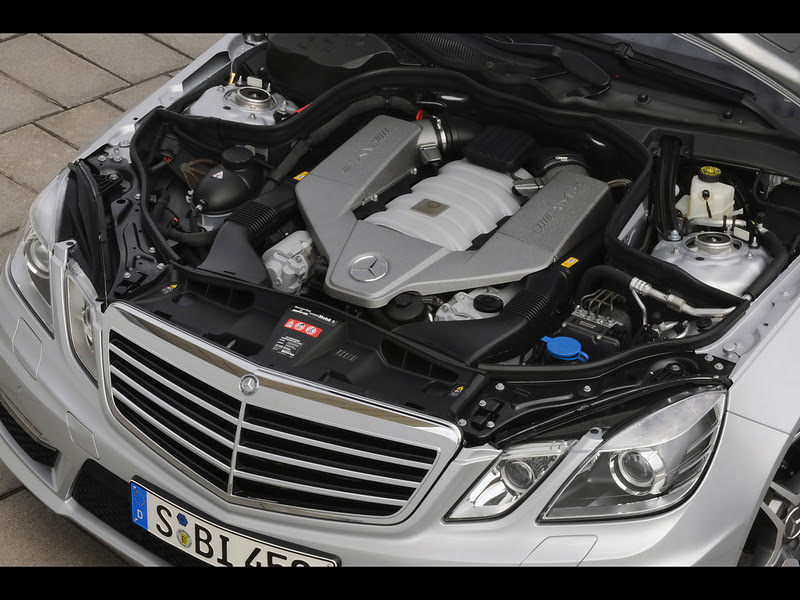
Exclusivity and dynamism combined with effortless superiority and state-of-the-art technology - both of the top S-Class models from Mercedes-AMG embody all of these characteristics and more: the Mercedes-Benz S63 AMG, with its 386 kW/525 hp AMG 6.3-litre V8 engine developing 630 Newton metres of torque, is capable of accelerating to a speed of 100 km/h in 4.6 seconds. The Mercedes-Benz S65 AMG, meanwhile, demonstrates even greater superiority: its AMG 6.0-litre biturbo V12 engine delivers maximum power of 450 kW/612 hp and maximum torque of 1000 Newton metres, accelerating from 0 to 100 km/h in just 4.4 seconds. Both saloons are electronically limited to 250 km/h. Despite no changes having been made to the engine data and performance values, it has still been possible to reduce fuel consumption and CO2 emissions by up to 3 percent.
Contributing to the even more exceptional status of the models is the new, more pronounced arrow-shaped radiator grille, featuring twin chrome-plated louvres in the case of the Mercedes-Benz S65 AMG. The new front apron incorporates striking, AMG-specific LED daytime driving lights and two transverse air outlets on each side. Further striking features include the "6.3 AMG" or "V12 Biturbo" lettering on the front wings and redesigned exterior mirrors.
Side sill panels emphasize the elegant line of the front apron through to the rear of the vehicle, where the new rear apron features yet another highlight: the centre section of the diffuser insert is now painted in the same colour as the vehicle body. New rear lamps with 52 LED's in the form of a double "C" also give the S‑Class an unmistakable appearance from behind. A distinctive element of both models comes in the guise of the sports exhaust with two chromed twin tailpipes, featuring a V12 design in the case of the Mercedes-Benz S65 AMG. Visual aspects which distinguish the V8 from the V12 model also include the attractive AMG light alloy wheels: the S63 AMG has 19-inch multi-spoke wheels painted titanium grey with a high-sheen finish and fitted with 255/40 (front) and 275/40 (rear) tyres. The S65 AMG, on the other hand, comes with 20-inch forged wheels painted in titanium grey with a mirror finish and fitted with 255/35 (front) and 275/35 (rear) tyres.
Crosswind stabilisation, Torque Vectoring Brake and Direct-Steer system
The AMG sports suspension based on Active Body Control (ABC) provides crosswind stabilisation as standard equipment for the first time: thanks to this function, influences caused by crosswinds are compensated for, or - in the case of strong gusts - reduced to a minimum. ABC compensates against the effect of crosswinds by adjusting the wheel load distribution within milliseconds, using the yaw-rate and lateral acceleration sensors of the ESP® Electronic Stability Program.

Also making up the standard equipment is the new Torque Vectoring Brake: when cornering, brief direct application of the brakes has an effect on the vehicle's inner rear wheel so that the saloon corners precisely and under control at all times. The Torque Vectoring Brake is an additional feature of the ESP® Electronic Stability Program and not only improves responsiveness but also active handling safety, which is particularly noticeable in critical conditions. The driving experience is further heightened thanks to the Direct-Steer system: with its variable ratio depending on steering angle, it helps to ensure a more direct response when cornering, and therefore more responsive handling - in brief: enhanced driving pleasure at the wheel of the Mercedes-AMG S-Class.

Based on the ADAPTIVE BRAKE system, the high-performance braking system continues to provide optimum creep strength, deceleration and sensitivity. The front axle features a double floating brake calliper. This exclusive technology combines the advantages of a sliding-calliper disc brake - reduced heat transfer to the brake fluid and clear advantages in terms of comfort thanks to the brake lining guide mechanism - with the efficiency of an extra large fixed calliper brake.

Extensive range of standard equipment with exclusive flair
The interior appointments are every bit as exclusive as the high-tech package: as soon as its door is opened, the Mercedes-Benz S65 AMG welcomes the driver with large, animated "AMG V12 BITURBO" lettering in the instrument cluster's central display. The main menu provides the driver with information about engine oil temperature, current gear range, battery voltage, and the RACETIMER, which displays lap times when on the race track. In the case of the Mercedes-Benz S63 AMG, the extensive range of standard equipment includes not only PASSION leather appointments, with natural leather in the seat side bolsters, but also front sports seats with climate control, massage, multicontour and driving dynamics control functions. The Exclusive PASSION leather upholstery in the S65 AMG, meanwhile, with its AMG V12 diamond pattern design, exudes an air of even greater refinement. Ample use of burr walnut trim elements and the AMG-specific analogue clock, featuring an IWC design, are a given in both models. Both the SPEEDSHIFT 7G‑TRONIC of the S63 AMG, as well as the five-speed automatic SPEEDSHIFT transmission of the S65 AMG, are fitted with DIRECT SELECT gearshift. Gear changes are carried out by means of aluminium shift paddles on the new AMG sports steering wheel.

New standards in active and passive safety
In addition, both of the top-of-the-line models set new standards when it comes to active and passive safety through a combination of innovative camera and radar-based driver assistance systems. These include the ATTENTION ASSIST drowsiness detection system, Adaptive Highbeam Assist, Lane Keeping Assist, and the PRE-SAFE®Brakes, which are linked to the proximity regulating radar and intervene independently in the event of an impending accident to act like an invisible crumple zone. The Night View Assist with infrared camera also features a novel pedestrian detection system. The pictures from the windscreen camera are also used by the new Speed Limit Assist, available as an option. The Brake Assist PLUS and DISTRONIC PLUS proximity control support the driver in the event of emergency braking. The PRE-SAFE® positioning function and NECK-PRO luxury head restraints are now also included as standard.

New infotainment systems, including COMAND APS with new SPLITVIEW display, which shows different images for driver and front passenger simultaneously, enhance occupant comfort even further.
Exclusive optional extras are also available from the AMG PERFORMANCE STUDIO:
  • AMG 20-inch double-spoke forged wheels, painted in titanium grey with a mirror finish and fitted with 255/35 R 20 front and 275/30 R 20 rear tyres
  • AMG trim elements in carbon/piano lacquer
  • AMG floor mats
While the Mercedes-Benz S63 AMG is available in short or long-wheelbase versions, the S65 AMG is only available as a long-wheelbase version. Both top-of-the-line AMG models will have their market launches from June 2009.


2010 Mercedes-Benz SLS AMG E-Cell Concept

Mercedes-AMG is accepting the challenges of motoring of the future: the Mercedes-Benz SLS AMG E-Cell is evidence of the state-of-the-art development of an exciting super sports car featuring a zero-emission high-tech drive. Boasting a power output of 392 kW and 880 Nm of torque, the technology vehicle from AMG is able to offer exceptional performance. The gullwing with electric drive is part of the company strategy entitled "AMG Performance 2015" which aims to continually reduce fuel consumption and emissions.
With the SLS AMG E-Cell, Mercedes-AMG is providing a glimpse of its latest development project - a powerful and locally emission-free super sports car. Finished in fluorescent "AMG lumilectric magno" paint, the gullwing offers the prospect of a possible small series production run and at the same time reflects the innovative strength and development competence of the AMG performance brand.
"We take social responsibility very seriously and with the Mercedes-Benz SLS AMG E-Cell we are demonstrating a further milestone in our "AMG Performance 2015" strategy. It is our goal to continually reduce the fuel consumption and emissions of new models in the coming years, while at the same time enhancing the core brand value of performance", explains Ola Källenius, chairman of the board (from 1 July 2010) of Mercedes-AMG GmbH. With the Mercedes-Benz SLS AMG E-Cell, the performance brand of Mercedes-Benz is launching a totally innovative drive solution for super sports cars and as such is among the pioneers in this market segment.
The ground-breaking drive system of the technology vehicle boasts some outstanding features: powerful traction is provided by four synchronous electric motors with a combined peak output of 392 kW and a maximum torque of 880 Nm. The four compact electric motors each achieve a maximum rpm of 12,000/rpm and are positioned near to the wheels. As a result, compared with wheel-hub motors the unsprung masses are substantially reduced. One transmission per axle transmits the power.

Acceleration from zero to 100 km/h in 4 seconds
When it comes to dynamics, the electrically-powered SLS AMG makes a statement: the gullwing model accelerates from zero to 100 km/h in 4 seconds - which almost puts it on the same high level as the Mercedes SLS AMG with 6.3-litre V8 engine developing 420 kW (571 hp), which can accelerate to 100 km/h in 3.8 seconds.
Further exciting touches are provided courtesy of the agile accelerator response and the straight-line performance: unlike the combustion engine, torque build-up with an electric motor is instantaneous - maximum torque is available virtually from a standstill. The spontaneous torque build-up and confident power delivery - which does not suffer from any interruption of tractive power - are combined with engine running characteristics which are totally free of vibration. Four motors, four wheels: the intelligent and permanent all-wheel drive of the electric SLS guarantees driving dynamics at the highest level, while at the same time providing the best possible active safety. Perfect traction is therefore ensured for all four driven wheels, whatever the weather conditions.
This very special gullwing is therefore able to "electrify" the driver with a completely unique, effortlessly superior and emotional super sports car driving sensation - and this is just at the prototype stage. In brief: the SLS AMG E-Cell is a true AMG too.

High-voltage lithium-ion battery provides 400V and 40 Ah
The Mercedes-Benz SLS AMG E-Cell drive incorporates a liquid-cooled high-voltage lithium-ion battery featuring a modular design with an energy content of 48 kWh and a capacity of 40 Ah. The maximum electric load potential of the battery, which consists of 324 lithium-ion polymer cells, is 480 kW, which is an absolute best value in the automotive sector. Another technical feature of this considerable performance is the intelligent parallel circuit of the individual battery modules - this also helps to maximise the safety, reliability and service life of the battery. The 400-volt battery is charged by means of targeted recuperation during braking whilst the car is being driven.

Key data at a glance:
  • SLS AMG E-Cell
  • Max. output: 392 kW
  • Torque: 880 Nm
  • 0-100 km/h: 4.0 s
  • Rated capacity: 40 Ah (at 400 V)
  • Energy content: 3 x 16 kWh = 48 kWh

High-performance electronic control as well as effective cooling of all components
A high-performance electronic control system converts the direct current from the high-voltage battery into three-phase alternating current which is required for the synchronous motors and regulates the energy flow for all operating conditions. Two low-temperature cooling circuits ensure that the four electric motors and the power electronics are maintained at an even operating temperature.
A separate low-temperature circuit is responsible for cooling the high-voltage lithium-ion battery. In low external temperatures, the battery is quickly brought up to operating temperature with the aid of an electric heating element. This helps to preserve the overall service life of the battery. In extremely high external temperatures, the cooling circuit for the battery can be additionally boosted with the aid of the air conditioning system.

Optimum weight distribution and low centre of gravity
The purely electric drive system was factored into the equation as early as the concept phase when the gullwing model was being developed. It is ideally packaged for the integration of the high-performance, zero-emission technology: by way of example, the four electric motors and the two transmissions can be positioned as close to the four wheels as possible and very low down in the vehicle. The same applies to the modular high-current battery, whose modules are located in front of the firewall, in the centre tunnel and behind the seats. Advantages of this solution include the vehicle's low centre of gravity and balanced weight distribution - ideal conditions for optimum handling, which the electrically-powered SLS AMG shares with its petrol-driven sister model.
The installation of the drive components required no changes whatsoever to the gullwing model's weight-optimised aluminium spaceframe. And there were just as few constraints when it came to maintaining the excellent level of passive safety and high degree of long-distance comfort that are hallmarks of Mercedes cars.
New front axle design with pushrod damper struts
The additional front-wheel drive called for a newly designed front axle: unlike the series production vehicle with AMG V8 engine, which has a double wishbone axle, the Mercedes-Benz SLS AMG E-Cell features an independent multilink suspension with pushrod damper struts. This is because the vertically-arranged damper struts in the series SLS had to make way for the additional drive shafts. As is usual in a wide variety of racing vehicles, horizontal damper struts are now used, which are operated via separate push rods and transfer levers.
Thanks to this sophisticated front-axle design, which has already been tried and tested in the world of motor sport, the agility and driving dynamics of the electrically-powered Mercedes SLS AMG attain the same high levels as the V8 variant. Another distinguishing feature is the speed-sensitive power steering with rack-and-pinion steering gear: the power assistance is implemented electrohydraulically rather than just hydraulically.
AMG ceramic composite brakes for perfect deceleration
The technology vehicle is slowed with the aid of AMG ceramic composite brakes, available as an optional extra for the series production model, which boast extremely short stopping distances, a precise actuation point and outstanding fade resistance, even in extreme operating conditions. The over-sized discs - measuring 402 x 39 mm at the front and 360 x 32 mm at the rear - are made of carbon fibre-strengthened ceramic, feature an integral design all round and are connected to an aluminium bowl in a radially floating arrangement.
The ceramic brake discs are 40 percent lighter in weight than the conventional, grey cast iron brake discs. The reduction in unsprung masses not only improves handling dynamics and agility, but also ride comfort and tyre grip. The lower rotating masses at the front axle also ensure a more direct steering response - which is particularly noticeable when taking motorway bends at high speed. The ABS and ESP® systems have been adapted to match the special application spectrum of the permanent all-wheel drive.

Full-LED headlamps and automatically extending front splitter
The purist, exciting design of the technology vehicle boasts a number of minor yet extremely effective modifications. At the front, the dynamically shaped full-LED headlamps with integrated daytime driving lights immediately catch the eye: they help to optimise the vehicle's energy efficiency, since they require less power compared with regular bi-xenon light systems. The wider radiator grille also has a new look, and now comes with transverse slats instead of a diamond-pattern grille. The air outlet openings on the bonnet and the vehicle sides have also been modified for enhanced aerodynamics. All trim and detachable parts, which are finished in chrome or silver shadow on the standard SLS AMG, are now finished in matt black.
The front apron has not only been brought further forward, but also helps to guarantee an optimised airflow in the area of the underbody. This improves air resistance while reducing downforce. An extendable front splitter enhances this effect: in parallel with the automatic rear spoiler, it extends downwards by seven centimetres at speeds above 120 km/h and helps to further accelerate the air which travels beneath the car. When it reaches the area of the rear axle, the air enters the rear diffusor which, due to the lack of an exhaust system, features a steeper angle, thus increasing downforce at the rear axle and in turn further enhancing the aerodynamic balance. The vehicle's AMG 10-spoke light-alloy wheels featuring a new, smooth-surfaced design are fitted with 265/35 R 19 (front) and 295/30 R 20 (rear) tyres.
Interior with new display instruments for electric drive
The transformation from petrol to electric super sports car also called for some specific changes to the interior. As a result, the AMG instrument cluster and centre console in particular both feature a new design. The new AMG instrument cluster provides information on speed, charge status of the battery and the estimated range. The newly designed centre console now houses a 25 cm touchscreen, which driver and passenger can use to conveniently operate all of the audio, climate and navigation functions, and also obtain information on the flow of power from the four electric motors.
The AMG Drive Unit, which is angled towards the driver, houses buttons for starting the motor, and the ESP® functions, the AMG memory function and the extendable front splitter and rear spoiler. Using three new buttons, the driver can switch simply between P, R and D. The park setting is also enabled automatically by switching the electric motors off.
The interior appointments are dominated by high-quality nappa leather in a black/white colour combination - it has been used not only on the sports seats, the performance leather/alcantara steering wheel and the door linings, but also on the broad centre tunnel which runs towards the back of the vehicle between the seats.


2010 Mercedes-Benz SLS AMG F1 Safety Car

When the new Formula-1 season gets underway in Manama/Bahrain (12-14 March 2010), it will mark the debut of the Mercedes-Benz SLS AMG F1 Safety Car - the most spectacular and powerful Official F1 Safety Car of all time. The job of the new Mercedes-Benz SLS AMG, which will be launched on 27 March 2010, is to ensure maximum safety in Formula 1. The "gullwing" model replaces the SL63 AMG, which was used as the Official F1 Safety Car in 2008 and 2009. As in the last two years, the C63 AMG Estate will be used as the Official F1 Medical Car for the coming season.
"Together with the entire AMG Team, I am very proud that the new SLS AMG is the official F1 safety car. I'm sure all Mercedes and AMG fans will be excited to see the gullwing model together with the new Mercedes GP Petronas Team at the F1 circuits," says Volker Mornhinweg, Chief Executive Officer of Mercedes-AMG GmbH.
From March 2010, the Mercedes-Benz SLS AMG F1 Safety Car will be deployed whenever hazardous situations such as accidents or bad weather endanger normal racing. The SLS AMG, piloted by Bernd Mayländer (38, from Germany), will be on standby in the pit lane throughout the entire race. When radioed by Race Control, the former DTM driver and his co-driver, FIA man Pete Tibbetts (44, from the UK) will take to the track at the head of the field in order to guide the Formula-1 race cars safely around the circuit.

Unique vehicle concept for maximum driving dynamics
The Mercedes-Benz SLS AMG has the best possible credentials for this demanding role in the top flight of motor racing: its 6.3-litre V8 engine has a peak output of 420 kW (571 hp) and a maximum torque of 650 Nm, enabling the gullwing model to sprint from 0 to 100 km/h in 3.8 seconds. Fast lap times are a must for the Mercedes-Benz SLS AMG F1 Safety Car, otherwise the Formula-1 cars' tyres and brakes would cool down too quickly, while their engines could overheat.
The unique vehicle concept is a key factor in ensuring outstanding driving dynamics: the aluminium spaceframe body keeps the vehicle weight down to 1620 kilograms (DIN kerb weight). And thanks to the dry-sump lubrication system, the AMG V8 powerplant can be installed very low down, resulting in a beneficial lowering of the vehicle's centre of gravity. The installation position a long way behind the front axle and the transaxle arrangement of the new seven-speed double-clutch transmission on the rear axle have a positive effect on the weight distribution, which is 47/53 percent (front/rear). Pure motorsport tech-nology is used for the AMG sports suspension: aluminium double-wishbone axles front and rear ensure outstanding driving dynamics with precise turn-in ability, first-class agility, low mass inertia when changing direction spontaneously and, therefore, a high cornering limit.

Double-clutch transmission and ceramic composite brake system
The AMG SPEEDSHIFT DCT 7-speed sports transmission with double-clutch technology features four modes and allows fast gear changes with practically no interruption in tractive power - in manual mode ("M"), gear changes can be effected in 100 milliseconds. Together with the 3-stage ESP, the integrated mechanical multidisc differential lock ensures outstanding traction. Meanwhile, braking distances are minimised and resistance to fading is maximised, even when the brakes are subject to typical race-track loads, courtesy of the AMG ceramic high-performance composite brake system with its generously sized ceramic discs measuring 402 x 39 mm on the front axle and 360 x 32 mm on the rear axle. The weight-optimised 10-spoke forged wheels are shod with 265/35 R 19 (front) and 295/30 R 20 (rear) tyres.
The Mercedes-Benz SLS AMG F1 Safety Car features the same engine, power transmission, suspension and brake system as the standard-production SLS AMG. The exceptional technology package for the super sports car ensures perfect driving dynamics and means that no further technical modifications or lightweight-design measures are necessary, with the sole exception of the all-new rear silencer, which allows the high-revving AMG V8 naturally aspirated engine to breathe more easily and offers Formula-1 fans an even more emotionally charged sound experience.

Aerodynamically optimised roof light bar incorporating LED technology
Compared to the standard-production SLS, the Mercedes-Benz SLS AMG F1 Safety Car is distinguishable on the outside by its prominent F1 logos, carbon-fibre exterior mirrors and the characteristic roof light bar with integrated TV camera. It sits on an all-new carbon-fibre hood whose shape has been tested in the wind tunnel to ensure optimum airflow at the rear aerofoil. The aerofoil pops up when the car reaches 120 km/h and, together with the rear diffuser, provides the necessary rear downforce. LEDs are used for all light functions for the first time in the new, aerodynamically styled roof light bar. Their advantages over the previously used bulbs lie in their extremely fast response time and low power consumption.
The two centrally positioned green lights in the aerodynamically optimised light bar are illuminated when the Mercedes-Benz SLS AMG F1 Safety Car joins the field and first needs to overtake all the racing cars in front of it. Once the SLS AMG has assumed the leading position, the outer orange flashing lights are switched on to signal to the Formula-1 drivers that no overtaking whatsoever is allowed. The white stroboscopic lights in the headlamps and tail lights perform a general signalling function in that they always flash whilst the safety car is deployed. A special number plate at the rear, with "Safety Car" lettering and 700 LEDs, provides additional safety in darkness or wet weather. A reversing camera is integrated to the left of the number plate, allowing those in the cockpit of the Mercedes-Benz SLS AMG F1 Safety Car to keep an eye on the Formula-1 cars behind via monitor.

Practical interior with AMG sports bucket seats
The distinctive gullwing doors open to reveal a practical cockpit which, like the exterior, differs only slightly from that of the standard-production model. AMG sports bucket seats with black leather upholstery and six-point seat belts ensure optimum lateral support. On the right side of the AMG DRIVE UNIT, there are four coloured buttons for controlling the various light functions, along with the signal horn, which is activated when the car is driving into and out of the pit lane. The centre console, like various other interior trim parts, is finished in genuine carbon fibre, while the AMG performance steering wheel in leather/Alcantara features a specially shaped grip area, a high-quality genuine-metal insert and a flat-bottomed rim with a diameter of 370 millimetres. Two genuine-metal shift paddles are used to change between the seven gears in the double-clutch transmission.
Two central monitors in the SLS AMG cockpit are used to monitor the progress of the race. To the left and right of the lower monitor are the controls for the radio system, which allows Bernd Mayländer and Pete Tibbetts to communicate with Race Control as well as with each other. A second interior mirror lets the co-driver keep an eye on the Formula-1 cars behind. Meanwhile, the "Marshalling System" is integrated in the central display on the instrument cluster and in the lid of the glove compartment: here the driver and co-driver can see exactly the same signals as the Formula-1 drivers in their cockpits. For instance, the various LEDs indicate when yellow or green flags are being waved. LEDs indicating the status of the roof light bar, along with an on-board camera angled towards Bernd Mayländer, are mounted at the front end of the dashboard.


Design by Free WordPress Themes | Bloggerized by Lasantha - Premium Blogger Themes | Skull Belt Buckles